

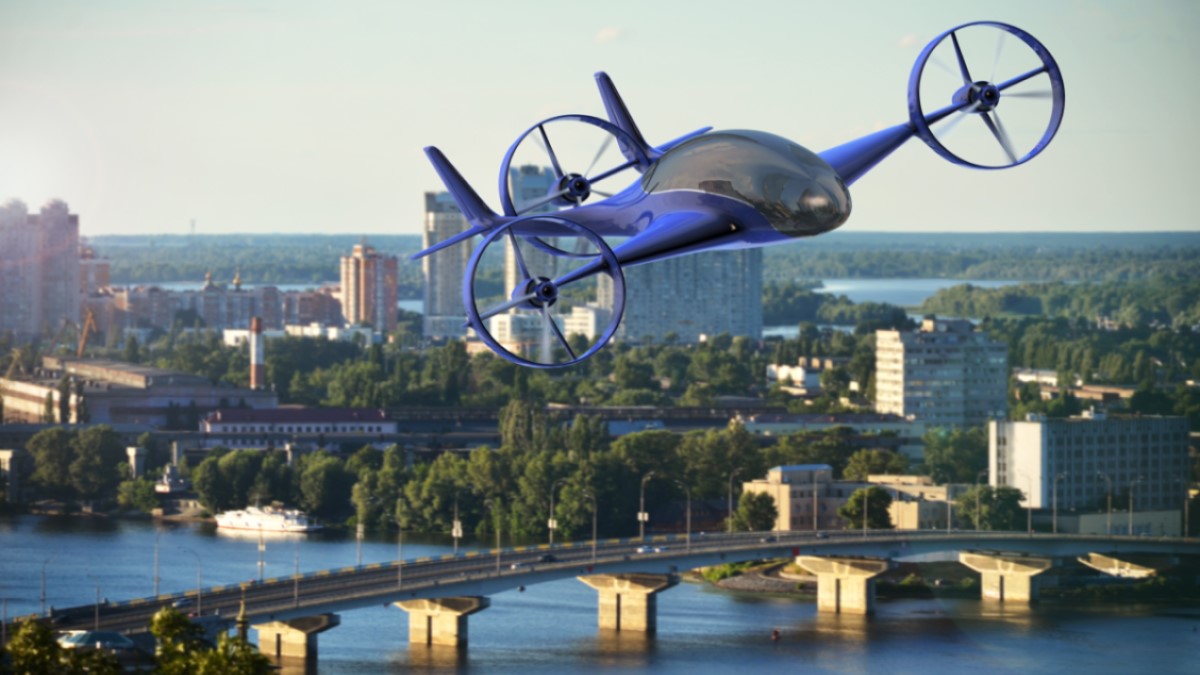
The idea of flying taxis has been around since the beginning of manned flight however it would probably be fair to say that switching to electric powered propulsion and advancements in battery technologies accelerated development of the technology. In the decade ahead, we can expect to see air vehicles that have the ability to vertically take off and land like a helicopter and cruise like a fixed winged aircraft, over the city skies. Flying taxis or by more commonly used term, eVTOLs (electric Vertical Take-off and Landing) constitute the foundation of Urban Air Mobility (UAM). While UAM takes air transportation to a step further with improved mobility, many hurdles stand before the implementation of this novel mode of transportation. Although some of the challenges are relatable to the needs and demands of air travel today, many will be unique to this new technology. Let’s take a birds view to some of those challenges.
- Battery life and charging rates are not quite ready to accommodate desired flight ranges and frequencies. While on one side, Distributed Electric Propulsion (DEP) concept is commonly used in designs to overcome these challenges, on the other side some hybrid-electric models are considered until battery technologies become mature enough to satisfy eVTOL needs.
- Autonomous flight is the ultimate goal for enhanced safety that it eliminates human errors. However, to ensure safe operations with full autonomy, development of advanced vehicle technologies is essential. These technologies, proprietary for vehicle manufacturers most of the time, range from advanced cognitive capabilities to detect and avoid obstacles like buildings, birds, or other air vehicles in the urban environment to robust navigation systems that can even operate at times communication networks are unavailable.
- Passenger perception of pilotless and no crew flight is another obstacle against autonomous flight. Questions over safety of a technology travelers are not accustomed to and security concerns around flying alone with strangers must be resolved.

Scalability is a key factor that will determine the future direction of the market. Achieving economies of scale means affordable prices and service being available for masses. For investments to be viable and market growth to be sustainable, public and community acceptance must be achieved. Here are a couple of challenges to overcome on the way to success:
- Establishment of ground infrastructure which should involve passenger and cargo transfer ports and check points, vehicle Maintenance, Repair and Overhaul (MRO) hubs, charging stations, and parking facilities is a crucial step. In addition, communications infrastructure to manage air space for reliable and controlled traffic, surveillance and navigation should be integrated in existing air space operations. One important question is who will carry which of these infrastructure costs, private investments or state?
- Public acceptance is a critical threshold to exceed for economies of scale to be achieved. It is not an easy task to convince people that this new mode of transportation will increase their quality of life, though. Moreover, close proximity flight over residential areas elevate privacy and visual disturbance concerns. Solid proof on efficiency, affordability, safety, security, and reliability has to be effectively communicated.
- Noise annoyance is the primary environmental barrier. In spite of the regulations in place, noise around airports or from helicopters flying over populated areas is subject to controversies from communities from time to time. Although eVTOLs are projected to be significantly quieter than helicopters, it should be kept in mind that noise annoyance might be quite subjective. In addition to the level and the character of noise, it can feed up with the perception of the vehicle itself. Taking these facts as guidance for eVTOLS, it is not only necessary to effectively manage the sound signature of the vehicles but also there is need for employment of right metrics to measure noise.
- Regulatory framework is the center piece of the puzzle. Federal laws, local ordinances, and industry standards are to be instituted regulating all elements in the UAM ecosystem from airworthiness and pilotless aircraft certifications to operational requirements on community related matters like ground infrastructure zones or noise limits. EASA made the first move by publishing type certification specifications for eVTOL aircraft in May 2020. One month later, in June 2020, FAA published concept of operations laying out an initial framework for UAM operational network.
In addition to those mentioned above, ensuring safety and control under changing weather conditions, competing with existing modes of transportation, implementing advanced manufacturing techniques and optimizing supply chain solutions as production rates increase and many other challenges stand before successful commercialization. Collaboration of private and public stakeholders within the ecosystem is the key to overcome these barriers. All elements, regulations, infrastructure, vehicle development, and community integration are interconnected and each can evolve and mature supporting one another to make UAM an indispensable part of urban life.
Featured Image Source: Costazzurra/Shutterstock.com
Resources

 akustikone.com